Should You Memorize Your Wedding Vows or Read Them?
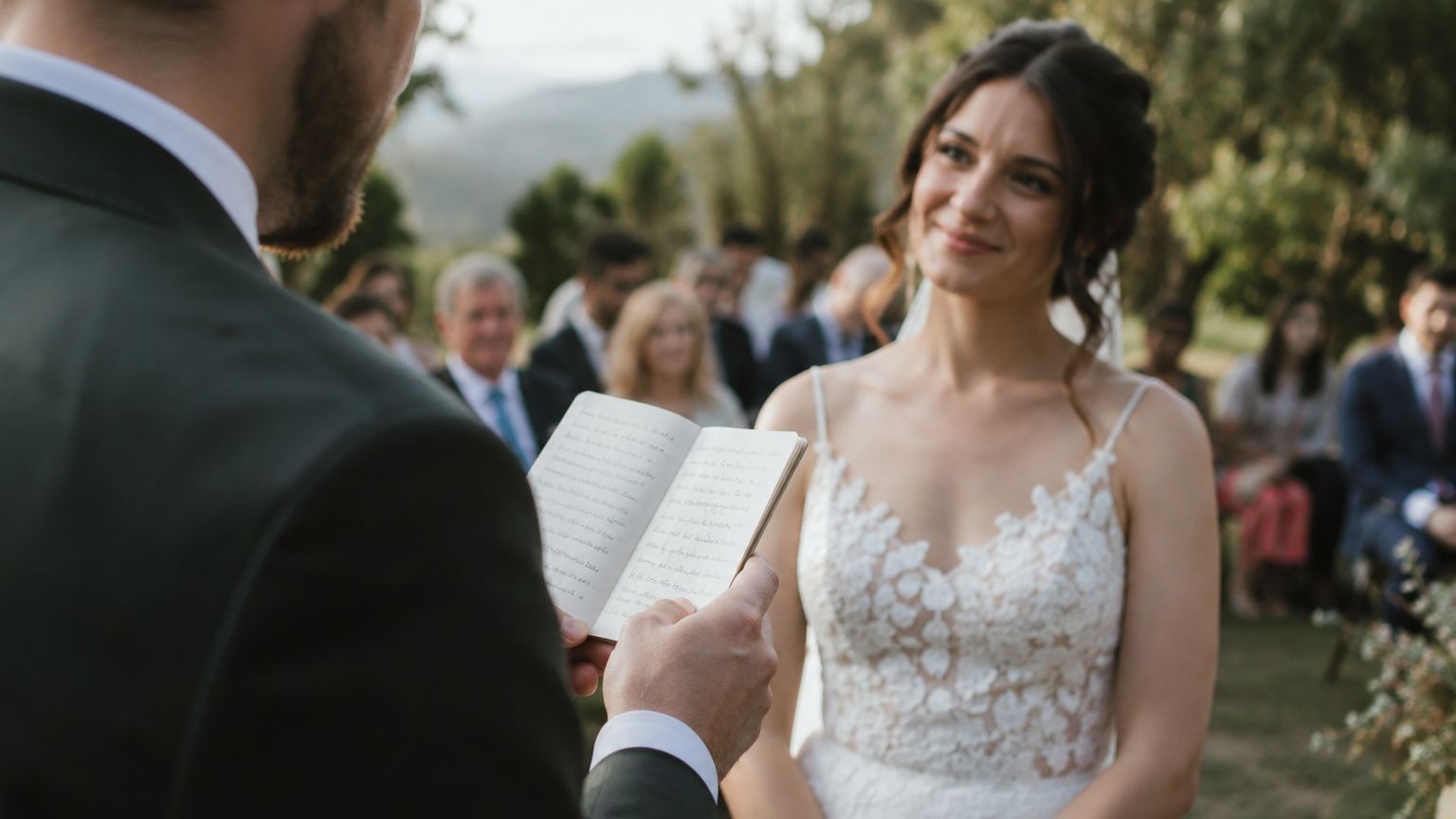

You've written (or almost written) your vows, and now a new worry has crept in: do you have to memorize them? Will it look bad if you pull out a piece of paper in front of everyone? Let's settle this one quickly, because it's a question that causes far more stress than it deserves.
We'll Cover:
- The Short Answer: Reading Is Normal
- Memorize, Read, or Hybrid? A Decision Framework
- What to Read From
- A Two-Week Practice Plan
- How to Keep Your Composure
- Backup Plans for the Big Day
- FAQ
The Short Answer: Reading Your Vows Is Completely Normal (and Usually the Right Call)
Should you memorize your wedding vows? No — for almost every couple, reading your vows is the better choice, and it's extremely common: plenty of couples who write personal vows read them from a card or vow book. No guest has ever left a wedding saying, "Beautiful ceremony, shame about the paper."
Here's the reframe that helps most people: your vows are not a performance, they're a promise. When an officiant leads traditional vows, couples repeat them line by line — nobody memorizes those either. Reading personal vows from a card or vow book signals that you took them seriously enough to write them down and get them right.
Memorizing, on the other hand, adds real risk for almost no reward. Your wedding ceremony is one of the highest-adrenaline moments of your life. Adrenaline is terrible for recall. People who deliver presentations for a living blank on stage; expecting yourself to flawlessly recite a personal, emotional text while looking into your partner's eyes — possibly through tears — is setting the bar somewhere it doesn't need to be.
So if you only take one thing from this article: print your vows, hold them, and read them. The rest of this guide covers how to decide if you're the rare exception, what to read from, how to practice, and how to hold it together.
Memorize, Read, or Hybrid? A Quick Decision Framework
There are three real options. Here's how to pick in about a minute.
| Option | Best for | Risk of blanking | Eye contact |
|---|---|---|---|
| Read from a vow book or cards | Almost every couple | None | Good with look-up cues |
| Memorize fully | Performers with short vows | High | Maximum |
| Hybrid (memorize first and last line) | Readers who want stronger moments | Very low | Strong at start and finish |
Read from a card or vow book (the right call for almost every couple):
- ✅ Zero risk of blanking
- ✅ Frees your attention for your partner instead of your memory
- ✅ Lets you write vows that are actually good, not just easy to remember
- ✅ The physical vow book becomes a keepsake
- ❌ Requires a little practice to avoid a "head down, mumbling at paper" delivery (fixable — see the practice plan below)
Memorize fully (right for very few):
- ✅ Maximum eye contact, hands free
- ❌ High-stakes recall under the most emotional conditions you'll ever face
- ❌ Tends to push you toward shorter, safer, more generic vows
- ❌ One blank moment can rattle you for the rest of the ceremony
Only memorize if all three are true: you have genuine performance experience (theater, speaking, teaching), your vows are short, and the idea of holding paper actively bothers you. Even then, have a printed copy in your officiant's hands.
The hybrid (a strong upgrade for readers): read from the page, but memorize your first line and your last line. You'll start with eye contact, land the ending looking at your partner, and read everything in between. This gets you most of the benefit of memorizing with none of the risk. If you want to structure vows so the opening and closing lines are easy to internalize, our guide on how to write wedding vows breaks down that architecture.
One more variable that changes the math: length. Truly short vows are the one real exception to the read-first rule — at twenty to forty words, full memorization becomes genuinely viable after a handful of rehearsals, which is exactly why our short wedding vows guide treats memorizing as the superpower short vows unlock (with a printed backup in your officiant's hands, always). For anything longer than a minute or so, the math flips back: read.
What to Read From: Vow Book, Cards, Paper, or Phone
What you read from matters more than people expect — it's in every photo of the vow exchange.
- Vow books (best all-around): Small bound booklets, often sold in pairs labeled "his/hers" or with your names. They photograph beautifully, they're easy to hold in one hand, and they become a keepsake. Write or print your vows inside in large text. This is the default recommendation.
- Index cards (best for nervous hands): Stiff, don't flutter in wind, easy to hold steady. Number them in case they're dropped. Less photogenic than a vow book but the most functional option for outdoor ceremonies.
- A folded sheet of paper (fine, with caveats): Works, but print it rather than handwriting it — under stress, your own handwriting is harder to read than you think. Use at least 16-point font with generous line spacing, and avoid thin printer paper that shakes visibly and catches the breeze.
- Your phone (don't): This is the one genuinely wrong answer. A phone at the altar reads as distraction in photos, auto-lock will fight you mid-vow, and a notification banner sliding over your vows is a real possibility. Phones are brilliant for wedding logistics — that's exactly how technology belongs in your wedding — but not in your hands during the ceremony.
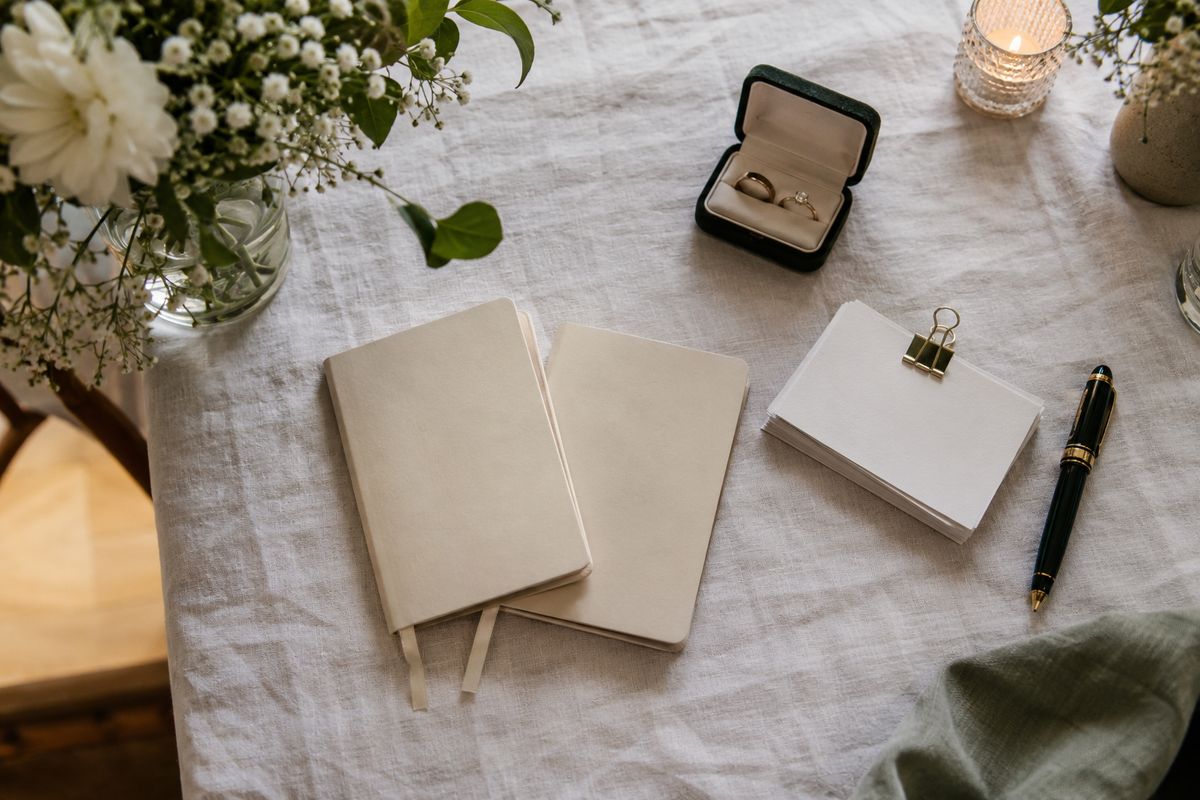
Whatever you choose, format for the moment: large print, short paragraphs, and a slash mark or line break everywhere you want to pause and look up.
If you drafted your vows with our wedding vow generator, you already have a clean, printable script — print it in large type, tape or copy it into your vow book, and that question is solved.
How to Practice Your Vows: A Two-Week Rehearsal Plan
"Reading" doesn't mean "seeing the words for the first time at the altar." The difference between a flat, page-bound delivery and a warm, connected one is about two weeks of very light practice.
Days 1–3 — Read aloud, alone. Read your vows out loud three or four times total. Not in your head — aloud. You're listening for sentences that look fine on paper but tangle your tongue or run too long for one breath. Rewrite those now. This is also when you'll discover which lines choke you up (important intel for later).
Days 4–7 — Mark up your script. Add pause marks after emotional lines, underline words you want to land, and put a "look up" cue at your first line, your last line, and one or two moments in the middle. Re-print or re-write the final version in your vow book. From here on, practice only from the exact object you'll hold at the altar.
Days 8–11 — Practice the delivery, not the words. Once a day, read them aloud standing up, holding the book at chest height (not covering your face, not down at your waist). Practice the rhythm: line, breath, glance up, next line. If you tend to rush when nervous, practice going 20% slower than feels natural — that's roughly the right ceremony pace.
Days 12–13 — One run in front of a human. Read them to a friend, a sibling, or your dog if that's all your nerves allow — but a person is better, because it inoculates you against the feeling of being watched. Do not read them to your partner; save that.
Day 14 (rehearsal / day before) — One final read, then stop. Read them once, put them away, and hand your backup copy to your officiant or coordinator. Cramming the morning of the wedding raises anxiety without improving delivery.
Total investment: maybe 90 minutes across two weeks. That's the whole plan.
- Days 1–3Read aloud, aloneThree or four times; rewrite lines that tangle your tongue.
- Days 4–7Mark up your scriptPause marks, underlines, look-up cues; copy into your vow book.
- Days 8–11Practice the deliveryOnce a day, standing, book at chest height, 20% slower.
- Days 12–13Read to one personA friend or sibling, not your partner.
- Day 14One final read, then stopHand the backup copy to your officiant.
How to Keep Your Composure (and Not Cry Through Every Line)
First, permission: crying during your vows is not a failure. Guests uniformly describe it as one of the most moving parts of a ceremony. The goal isn't zero tears — it's staying able to speak. These tactics work:
- Burn off the first exposure. The number one composure tool is the practice plan above. The first three or four times through, certain lines will wreck you. By the tenth time, those lines still mean everything, but your body has processed the initial wave. Never let the altar be the first place you say your vows out loud.
- Slow down and breathe at your marks. Crying escalates when you rush. Your pause marks are also breathing points — one slow breath at each mark keeps your throat from tightening.
- Press your tongue to the roof of your mouth. A trick borrowed from public speakers for suppressing the crying reflex for a few seconds — long enough to finish a line.
- Look at their forehead, not their eyes, for hard lines. Eye contact is the emotional accelerant. For your most devastating line, aim at your partner's eyebrows; nobody can tell the difference from ten feet away.
- Put a funny line before your heaviest line. Structure is a composure tool. A laugh releases the room's tension — and yours — right before the emotional peak.
- If you break, stop and breathe. Don't talk through sobs. Pause, breathe, smile, let the room laugh warmly with you, and start the line again. A ten-second pause feels like a minute to you and like nothing to your guests.
And the practical bits: waterproof mascara, and a handkerchief or tissue tucked into a pocket, bouquet wrap, or your officiant's jacket.
Backup Plans: Extra Copies, Your Officiant, and What to Do If You Freeze
Redundancy kills panic. Three cheap moves cover essentially every failure mode:
- Give your officiant a printed copy of both sets of vows. This is the master backup. If a vow book is forgotten in the hotel, dropped in a pond, or left in a jacket that's now on a groomsman, the officiant hands you the copy and the ceremony rolls on. If you have a day-of coordinator, handing over vow copies belongs on the wedding coordinator checklist alongside rings and marriage license.
- Stash a second copy with your ceremony essentials — the bag with the rings, marriage license, and emergency kit. Thirty seconds of effort, total insurance.
- If you memorized and you freeze: stop trying to remember. Smile, say "let me get this right — I wrote this down for a reason," take the officiant's copy, and read. The room will laugh with you and the moment will be one of the most human of the day. Frozen recall rarely comes back under pressure; the paper always works.
One more backup worth naming: your officiant can also feed you lines ("repeat after me") if you ask them in advance to be ready for it. Officiants have seen every version of vow panic — telling yours "if I stall, jump in" costs nothing and buys real peace of mind.
- Vow book with your final, marked-up script
- Printed copy of both vows with your officiant
- Second copy in the ceremony essentials bag (rings, license)
- Officiant briefed to feed lines if you stall
- Handkerchief or tissue in a pocket or bouquet wrap
- Waterproof mascara
- Phone left with someone else — not at the altar
FAQ: Memorizing and Reading Wedding Vows
Is it OK to read your wedding vows?
Yes — completely. Reading personal vows from a card or vow book is standard practice, and traditional vows are repeated after the officiant, so nobody memorizes those either. Guests are focused on what you're saying and how you're looking at your partner, not on the paper in your hand.
Do wedding vows have to be memorized?
No. There is no tradition, etiquette rule, or religious requirement that vows be memorized. Memorization is purely optional, and for most people the risk of blanking outweighs the benefit.
What if my partner memorizes and I read?
Totally fine, and more common than you'd think. Agree in advance so neither of you is surprised, and match roughly on length and tone — that matters far more than matching on delivery method.
How early should I finish writing my vows so I can practice?
Two weeks before the wedding. That leaves room for the full practice plan above without turning vow prep into a final exam. Finishing the night before is the single most common self-inflicted vow mistake.
Should we share our vows with each other beforehand?
Keep the words a surprise, but sync on format: roughly how long, whether you're going funny or earnest, and whether you're reading or reciting. Mismatched expectations ("mine were 45 seconds, theirs were four minutes") cause more day-of awkwardness than any delivery stumble.
Next Steps
Decision made: write vows worth hearing, print them large, read them from a vow book, memorize only your first and last lines, and give your officiant a backup copy. Spend the energy you were going to spend memorizing on practicing aloud instead — that's what actually makes vows land.
With the vows handled, the rest of your wedding communication deserves the same calm. Text My Wedding keeps guests informed by text — schedules, reminders, last-minute changes — so the only thing you're delivering on the day is the promise in your hands.
Still drafting? Start with our guide on how to write wedding vows, or generate a personal first draft with the wedding vow generator. For the wider ceremony logistics, see our wedding coordinator checklist.
About the Author
Emily is a wedding writer focused on guest communication, planning logistics, and practical ways to make wedding days run more smoothly. She writes guides and real-world case studies that help couples stay organized and keep guests informed.
Keep reading
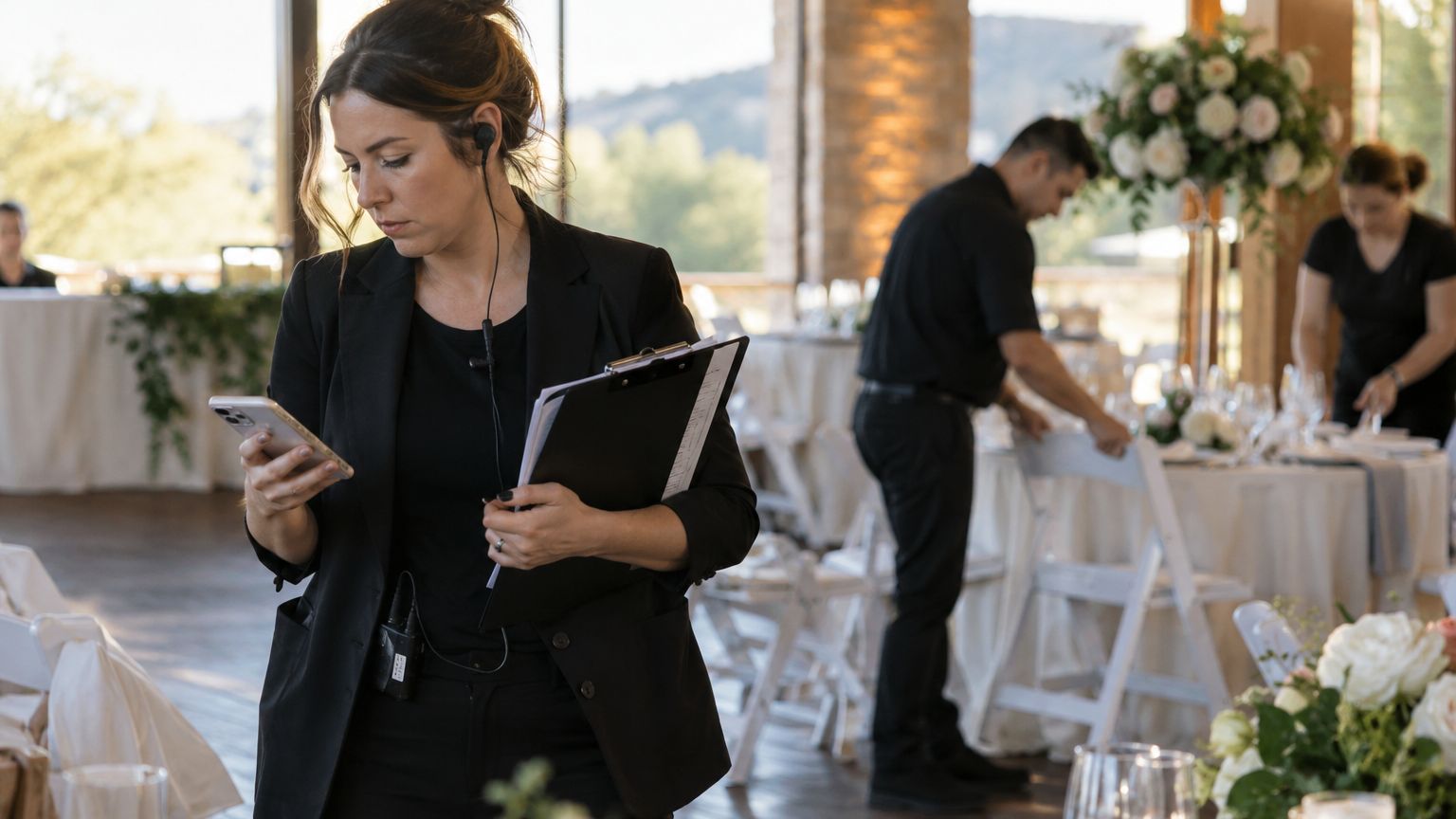
Wedding Coordinator Checklist
A complete wedding coordinator checklist: vendor and guest-count tasks 3 weeks out, the final week, rehearsal, day-of ceremony and reception duties, and post-wedding follow-up.
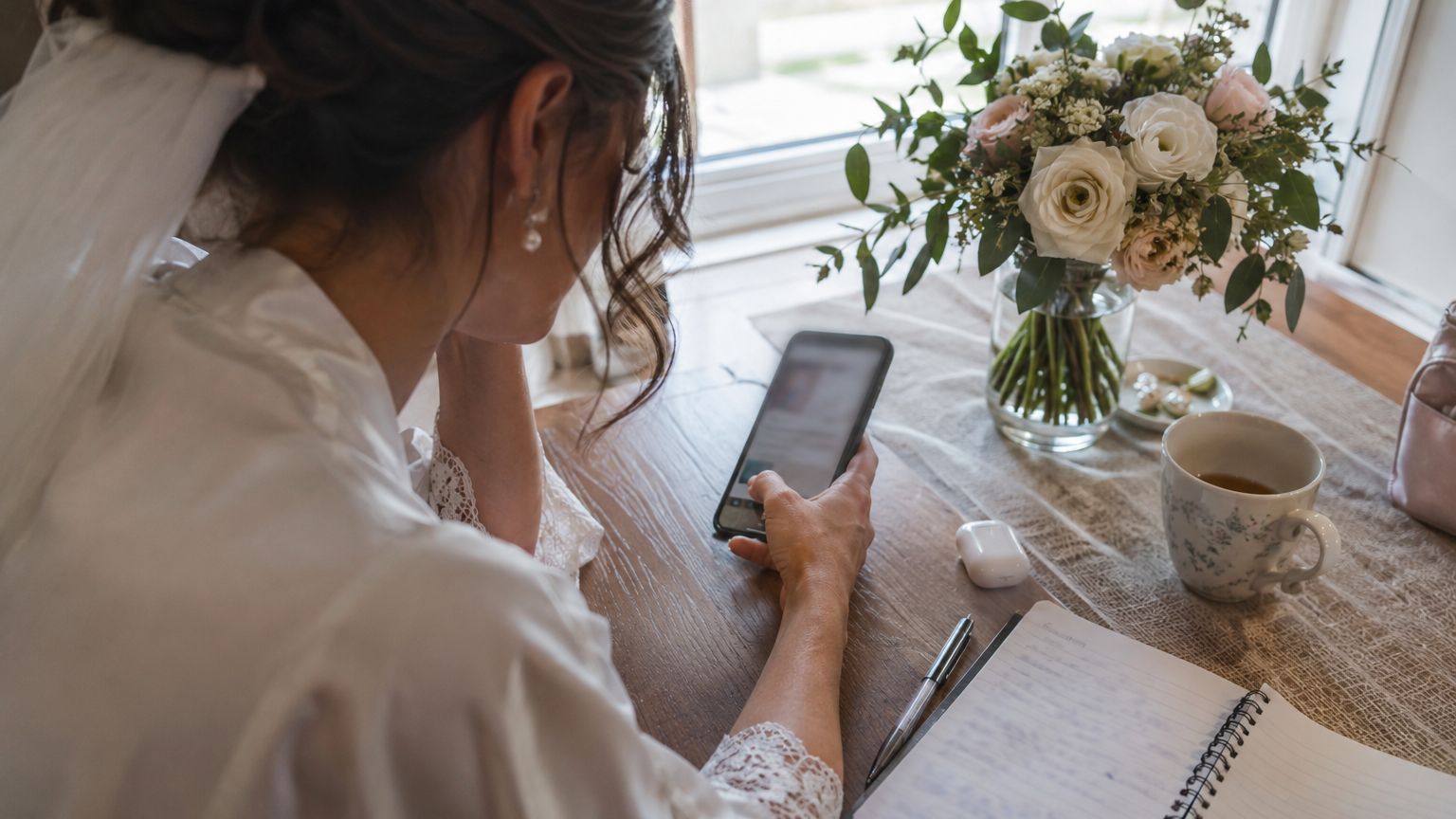
How to Incorporate Technology into Your Wedding
From digital invitations to interactive photo booths, learn how technology can make your wedding day unforgettable.
How to Communicate with Wedding Guests
How to keep wedding guests informed: choosing channels, what to put in invitations, sharing key details, and handling RSVPs and guest questions.